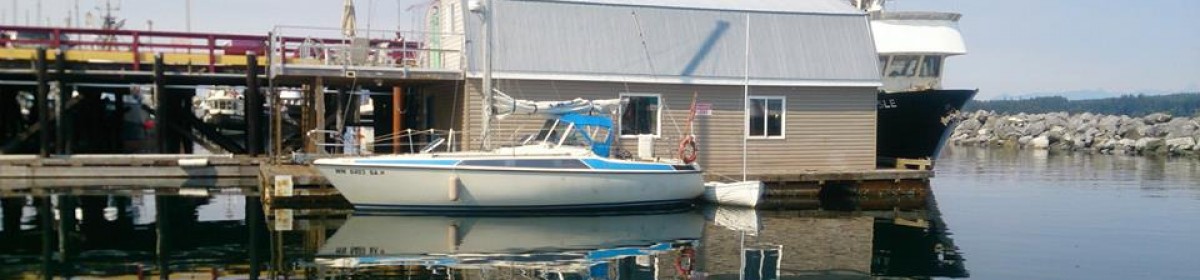
Echo Bay, BC, 7-JUL-2025 – It was only an hour or so from our last stop, Waddington Bay. Yesterday, there were three boats on the dock and Irvin, the dockmaster and hereditary Chief for a local tribe came down to guide us where to dock.
We spoke to two of the other boats before they left and spent the rest of the day exploring the area and speaking with Irvin, Kathy and Rod.
The ownership of this marina has changed three times in the last thirty years and is now owned by a local Band of a first nations people – A Band is a business entity versus a tribe or nation. They are doing very good work revitalizing the marina.
We wandered around and met Kathy and Rod who own a house on land they bought from one of the previous owners. They’re from Gig Harbor, Wa in Puget Sound, near Tacoma.
They spoke about a topic that surprised me, made me happy and kind of shocked me: the lack of visitors to the Broughtons. The Broughtons are a group of many, many islands, some have numbers rather than names, with many little coves, bays, and harbors. Until a few years ago there were eight marinas in the Broughtons serving the many people who came up to visit. Generally, they’d stay a bunch of days or a week before moving on. Now, no one does.
We’ve been arriving in anchorages between 9 and 11 am, when people generally start to leave to get to their next anchorage. We find the entire anchorage turns over. Further, there hasn’t been a problem finding a good place to anchor here in the Broughtons.
We’ve received four reasons: Its too far away for a two-week vacation, it is through a series rapids (gates) that one must go through – not entirely true, but every impediment to getting somewhere thins those that do, very many fewer a Americans are coming up and rich Americans are heading to Alaska in their new very big boats.
Fuel is expensive, but docking is fairly cheap, and the docks are good. But no one comes here, which makes the Broughtons an empty, lovely place to go.
Jennifer is changing. She doesn’t like big winds anymore and doesn’t like empty moorages as much. Is she indicative of a change in boaters? Everyone we meet comments on the restaurants in the places with docks – reminiscent of when I boated on Long Island and San Diego in the 70s and 80s.
I’m not sure what I think of all of this. The emptiness is lovely, but it will hollow out the businesses, turning this area into what much of Southeast Alaska is: empty towns being reclaimed by the wilderness, visited by Americans in big boats, who anchor, look around, and move on.
The land here is ‘‘unceded’’ First Nations land. This seems to mean what it says, disputed land. The First Nations never gave it up and Canada owns it. These days, it seems to be that the First Nations care for it. Then there are logging and other issues that I will need to learn about.
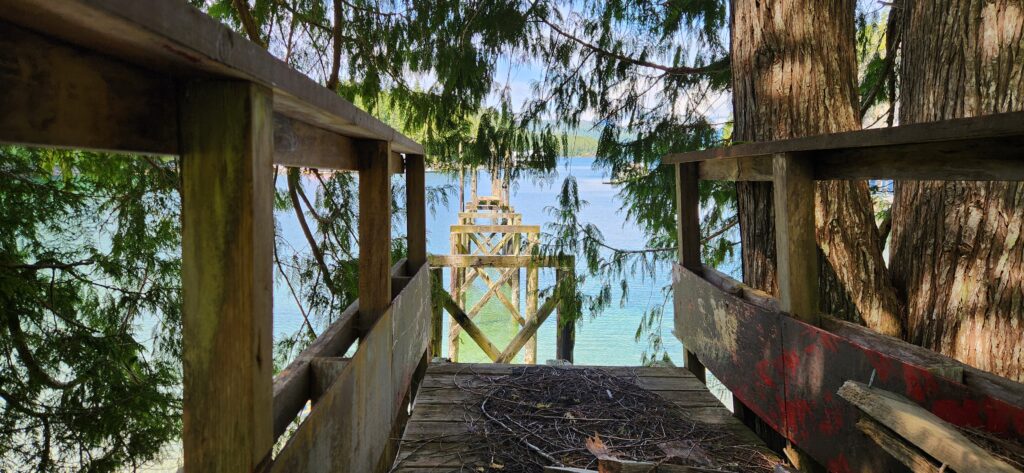
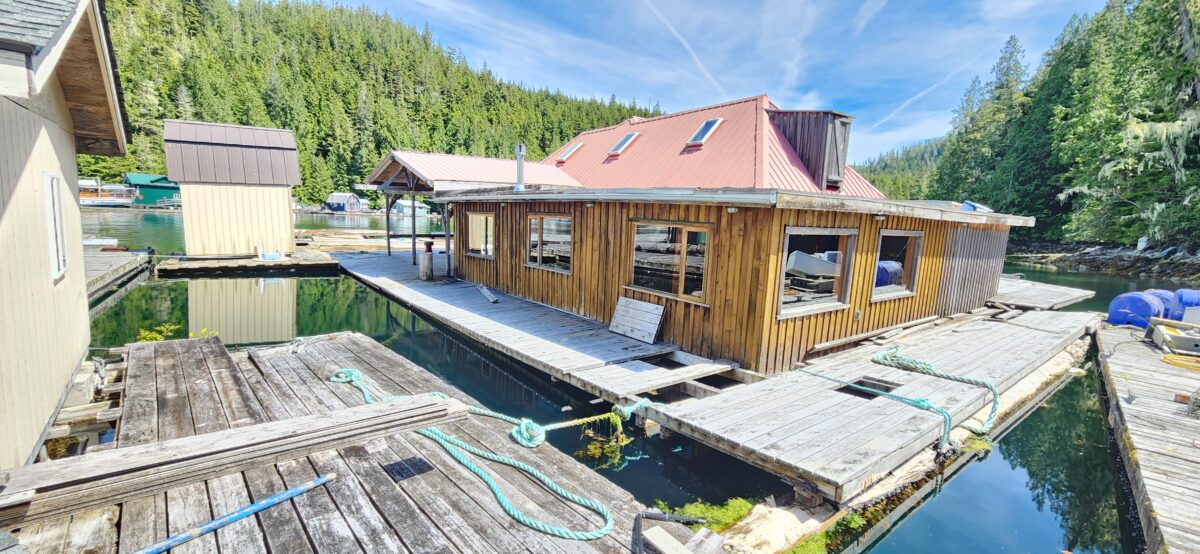
Across the water from Echo Bay is another marina with private docks, floating houses, and public moorage. It is no longer attached to the land, the walkway having rotted away. At Echo Bay, there are also floating houses, which are rotting away as well. Irvin is spending his time cleaning up Echo Bay and making it look nicer. The Band has refitted the kitchen in the once restaurant, but I don’t know how you get things started. Irvin says they can’t find help because the First Nations people have been supported by the government for so long they have no interest in working. They’ll need to find people to work here. This may not be as difficult as it sounds because there are many young people less than 30 years old, who want to come to Canada on a working holiday. There’ll be no restaurant this summer because the season has only six or so weeks left.
We left Echo Bay and motored to Viner Sound, about four miles away. There were rumored to be two mooring balls we could tie to in two small inlets. We had previously been wary of finding any empty, but by now we understood that there are little chance anyone would be on them, and so it was. The ball on the left side of the sound was the most protected and also in the best shape. There were four balls at one time, two on each side and the inlet we chose could certainly have held a second ball.
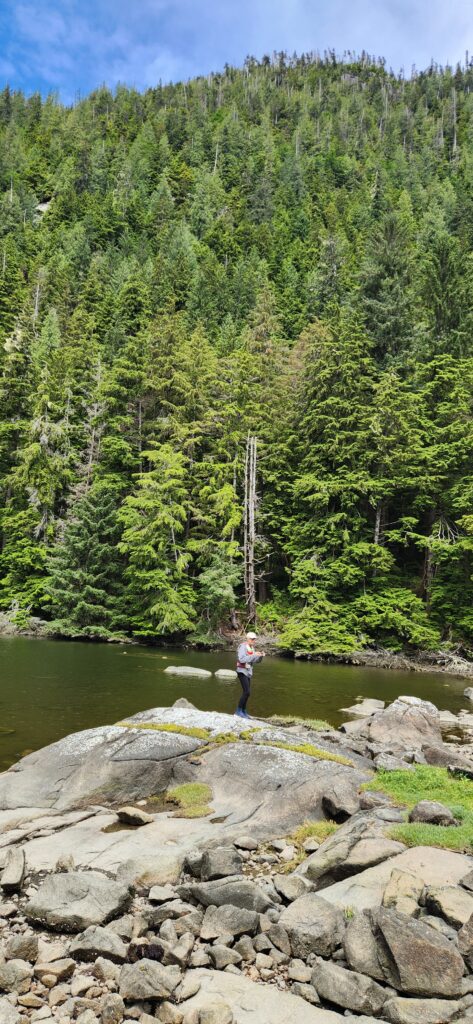
We immediately put the dinghy in the water and rowed to shore. There is a saddle between this inlet and another that never completely covers. Where we are anchored is hidden from the predominant winds and all fetch. It would rain tomorrow, so it is a great place to anchor for two days.
We’re finishing up all the fresh food and unpacked more food that I canned. We have enough greens for four more days and canned meat for another two weeks. We’ll be in Port McNeil Saturday meeting Jeremy and Steve from the Zingaro group; we’ll re-provision there and see the work Jeremy has done re-powering his Catalina 30.
Last night at midnight a boat with a bright light came into our anchorage. They were checking the crab traps in the anchorage. I woke Jennifer who was at first suspicious because of the time of night, and then watched them pull the traps and move on to the inlet across the water.
She came back to bed and slept through the night, as did I. We heard no wolves call, nor did Jennifer see any bears on the beach at low tide this morning in the rain.
This morning, the 8th, I turned on Starlink, spoke to Samantha and a potential housemate for my Willivee house, sent an email to someone we met last year, and finished writing this.
Three more days and we start heading home. Dana and Kevin have alerted us to the crowded conditions south of here, so we are girding ourselves.
