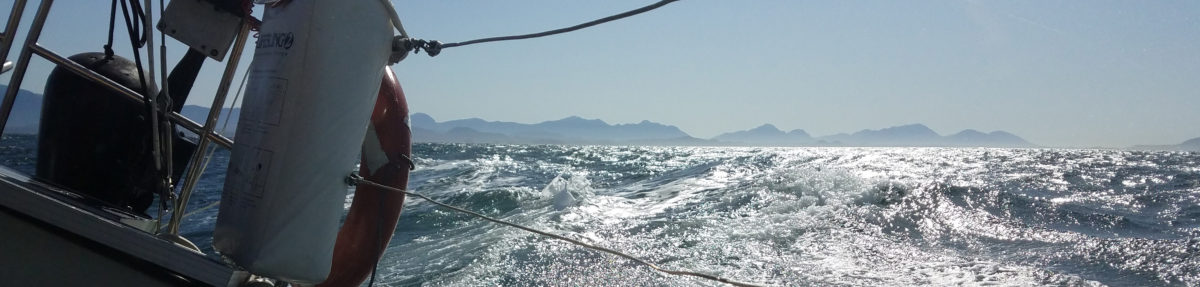
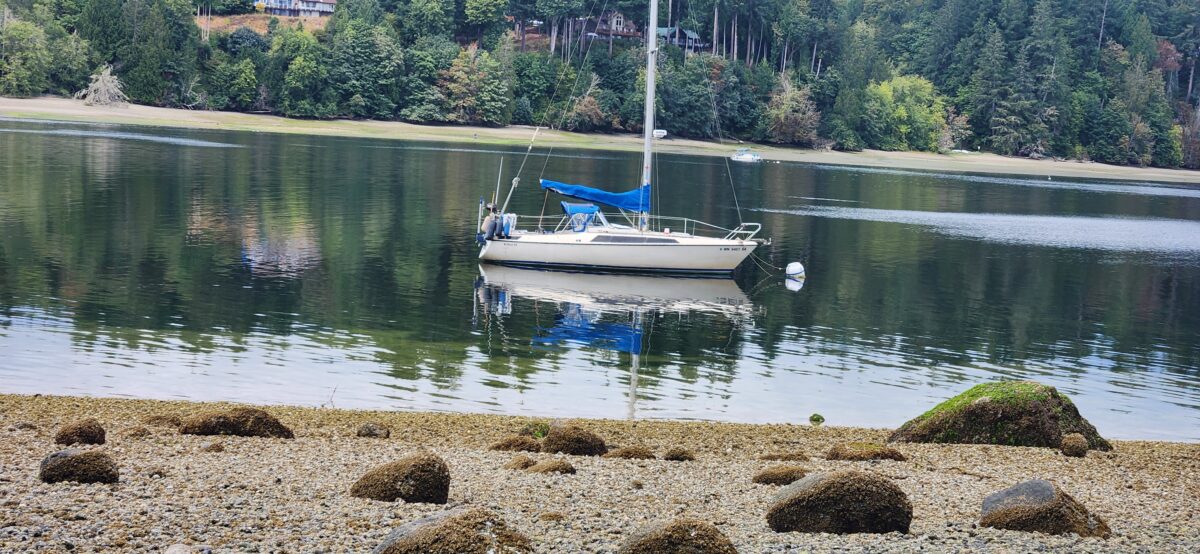
McMicken Island State Park, 29-AUG-2026 – It’s Saturday, the last Saturday in August. We’re at anchor, on a mooring ball in Puget Sound. The people we run into don’t take there boats out of the country generally and the Sound is their boating world. Most are still working, so it is quite understandable.
We’ve been back from our Canada trip about a week and half and been on the boat since then. We’ve been out of Port Townsend for nine days. Three of those were in Swantown in Olympia.
Despite our travels, family and family responsibilities (and business) have crept into our travels. We were in Olympia to help Jennifer’s daughter change apartments. The new space is marvelous for her daughter and cat. It opens onto a public patio where there are people and those people bring their animals. I worked on the move one day, Jennifer worked on it part of two more, then her daughter had had enough of mom’s help and we left the next morning (yesterday).
The distances in Puget Sound are short. 100 miles or so top to bottom. We’ve been doing well getting dock space and mooring balls at the parks. The general consensus is that there are fewer boaters this summer. That fuel costs 50% more this year is pointed to as the problem. My brother in New York asks what will happen this winter when heating oil prices are this high?
Summer? The summer is almost over. September starts on Monday. Some children are already back in school. The weather is changing. It is raining as I write this and the temperatures dip into the low fifties at night – nice weather to sleep with Jennifer who is usually hot. The sun in the middle of the day is very hot, but it is chilly in the shade.
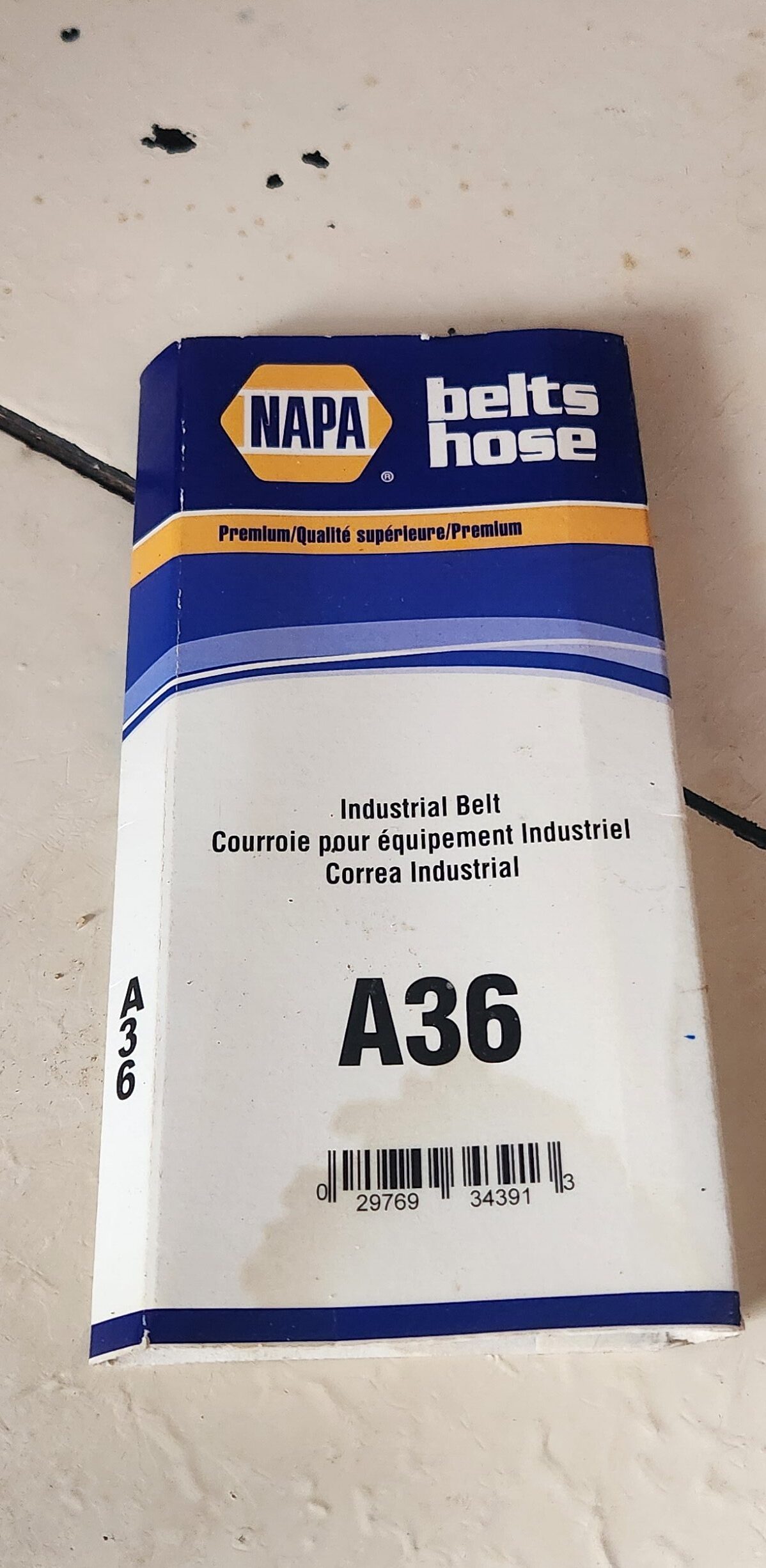
Caro Babbo is in good shape, but we’ve had normal things: the alternator V-belt broke – I had two spares. Part of the toilet cracked from age – I had the part shipped to Olympia and discovered to my shock that Fisheries Supply now requires a $200 minimum purchase for free shipping. Both of those repairs were fixed in under 30 minutes each. But, by replacing the cracked tube where the water is pumped, the new increased pressure allows clean seawater to squirt out of the top of the pump. We’ll live with it this season. In the fall, I’ll make the decision to repair it or replace the toilet with a composting toilet.
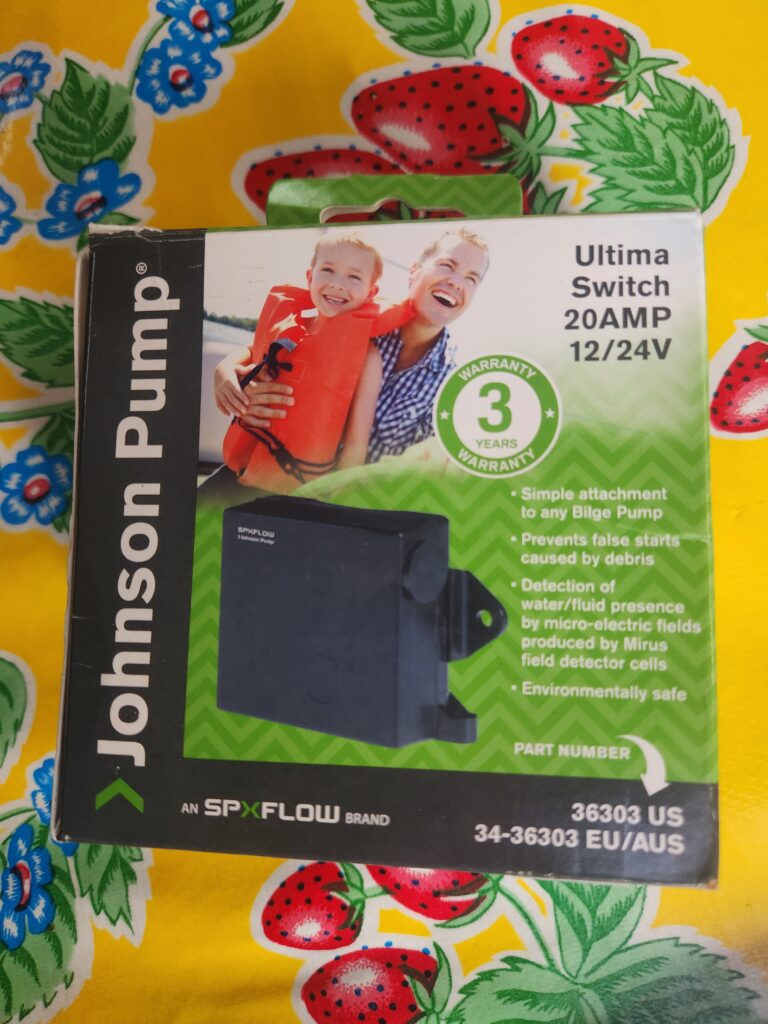
The switches on the bilge pumps are giving me problems. I’ll look at them today or one day this week. I think it is time to abandon the solid state pumps. They only last two years or so. To get to them I have to rearrange all of the hoses that run through the bilge. We have no water leaks that I can find – now, I’ve written that, what does that portend? The water that is being pumped out of the bilge is melting ice from the ice box.
We did consider buying a portable refrigerator, but I’m bleeding money right now, so we put it and several other things on a deferred list, BUT I did replace the 160 W solar panel on the dodger.
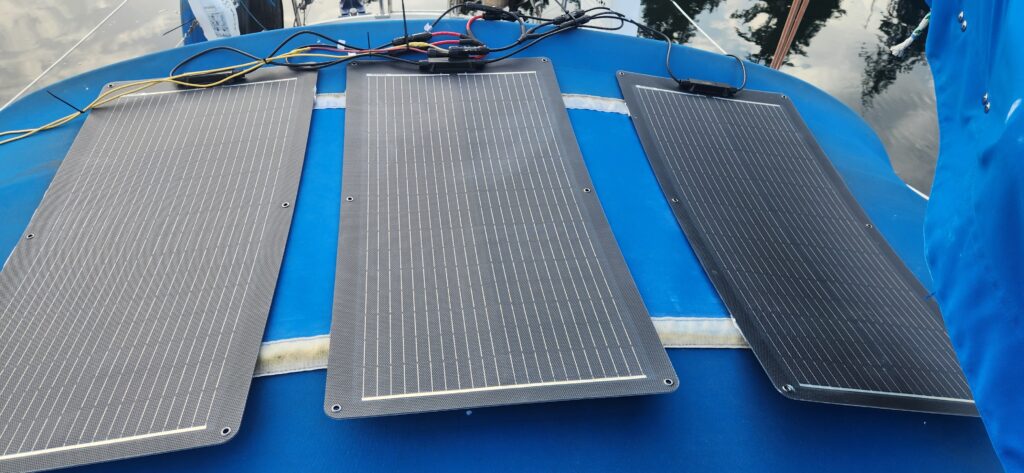
I discovered a year or two ago that a shadow that covers 5% of that panel turns off the entire panel, so generally we were just lugging around a useless panel. This year I bought three 50 W solar panels to replace it. They aren’t an exact fit, but the change in charging is amazing (to me). I learned this from John Riley who has four 50W panels on stalks around his cockpit, each in facing a different direction, so that as the boat spins at anchor, he always has one panel facing the sun. It is very clever and it works.
We’ve been doing sailing this trip – we haven’t been on the move many days, but we are trying. The weather forecasts are still what they are. We should trust the weather as we know it in Puget Sound. Generally, very little wind in the morning. A good breeze in the afternoon and then settling in the evening, except when it doesn’t, like last night. But by then we’re at anchor and we listen to the wind hum in the rigging.
I may have stretched the 170% genoa. We put it up one morning when the wind was less than five knots and sailed with it very well. The wind built and eventually crossing ten knots: more than I should have been sailing with it. I suspect that it stretched. Jennifer noticed a tear in the sail and I found another along a seam. The tear that Jennifer found, I think, has been there for a few years. When I had the sail worked on last spring, neither I nor the sailmaker could find the hole. I did find it Thursday after fixing the toilet and installing the solar panel, I patched it with some sail mending tape that has traveled with me for the last 20+ years. It is the first time I’ve used it.
We switched to the 135% and the wind continued to build. We were running out of sound to sail in so rather than reef, we dropped the genoa and motored into Swantown Marina.
On the way down we stopped at Blake Island for two days. We met the park volunteers and the park ranger and three young men (in their twenties) taking a 42ft-on-deck ketch to San Francisco to live on. Two were ex-military and were going to start school on the GI bill. The third was a younger brother.
They were setting out in the manner that many people did years ago with a general idea and they would figure it out as they went, meeting people and then out into the ocean. They had never anchored a boat before and their navigation equipment had just died. Jennifer told them about Garmin’s Navionics and OpenCPN, which they started with. They had another product designed for iOS but it didn’t behave well on Android. They couldn’t receive AIS, but we did discover they were still transmitting, and we suggested they call any ships they see to ask about weather in the coming days. They did have a small hand held that received SMS messages.
When we last saw them on AIS they were in Neah Bay, which is the last stop before making the jump. They were thinking of going offshore, as we did. We wish them luck and a great adventure.
