Port Townsend, WA – 16-NOV-2026 – When I started reading books by people who cruised, they were all written twenty years after the author had stopped sailing offshore. And so it seems with me, although it is not twenty years.
Twenty years after sailing Long Island Sound, I became single again and had a startup collapse on me. I did what any person in that place does: I lit out of town. I went to NY and worked on a boat.
The boat was a Thunderbird that my dad had bought. I’ve written about that before, so I won’t go into detail again… But that’s not true. I’ve been looking at pictures so much the last few times that I convinced myself that I’ve written about our T-Bird in depth.
Let’s pick up my reminiscence there with detours along the way.
The work of getting Taaris in the water was long, I think. I remember it being long, more than a month of everyday work. I’d go out on weekends for a few months – I was living in NYC then.
In fact, I looked at an apartment in Fort Washington. Like many things, I should have bought it. The area was turning over as the people who originally bought there were old and dying. It was and is a great place to live.
The major job on Taaris was repairing the deck of the boat, which was soggy from misuse, allegedly by the racers to whom the boat was lent for the Worlds that were in Toronto(?) one year. Like many boats (including Caro Babbo), the deck is made of balsa wood between two sheets of fibreglass. The balsa provides volume and some stiffness; the sheets of fibreglass provide the outer stiffness like the outer edges of a sheet of corrugated cardboard.
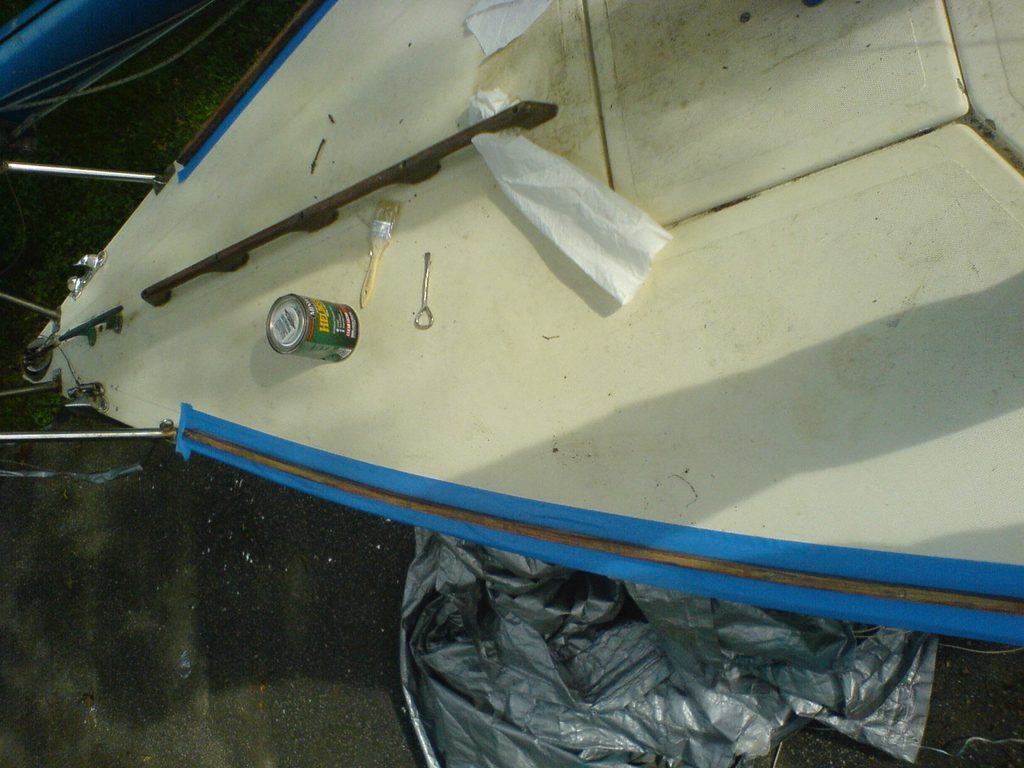
The front three feet of the deck was completely soggy and needed to be replaced, as did other places on the top of the cabin. My dad did the many things he was known for: he located the materials, invented new materials, and described to me how I was going to do this. He also paid for everything.
While this process is often done from the top by cutting and peeling back the top sheet of fibreglass, we decided to do it from the bottom. Very messy, but very clean looking from the top. A soggy deck is discovered by tapping with a hammer or walking across the deck and feeling it give as you walk. I don’t remember which was necessary, but I do remember the water pouring out as we cut away the underside. Then we grabbed by hand the squishy balsa, cleaning it out until we hit dry solid balsa.
I jump back from the work to the beach at Cedar Beach. It is a town beach on Long Island, which means in season you must live in the town to use the beach, but I didn’t drive in the beginning, so it was my parents who wrestled with that.
The air and the water was quiet, soft, and gentle. The water was remarkably blue in the morning, and I remember floating on my back with my face above the water. I’d breathe in and my chest would rise, out and I’d sink back.
Mixed with this was sailing the Star. Early morning, I guess I could drive by then. I’d little more than drift out through the entrance. It is a goose neck, which keeps the waves out. And we’d sail, seemingly not to be moving until we looked back and then we’d be out so far, maybe a couple of miles. It was quiet and comforting.
The T-Bird, once in the water, was generally different. Having an outboard changed things because I could be somewhere by a certain time. Sailing with Cathy was one type of sailing, sailing with other women was different. They’d come to stay on the boat for a few days. We’d sail, I’d cook, and we’d go places, but always home at night.
It was a different time of life and a short section that I had almost forgotten. When I sat down to write this, it was interesting to be completely single again, no steady woman. It was very freeing. However, there was no money coming in. At the end of that summer, I went back and started a startup. It was one of those startups that ate all of my time and all of my money. When it was over, I related to friends that if I had just stayed at home and watched I Love Lucy all day for those three years, I would have 80,000 more dollars. I did have a life and tried to live it. Sitting down to write this reminds me of it. All the people that I met, and none of whom I kept. But that was in the period between the summers. I have to put this together because while I was working on Sophia’s, I did not leave for three months, I guess, for two years. I only came up for two weeks or so.
I had only reminisces about the good times and sailing on Long Island Sound with Jennifer because those really were very good times.
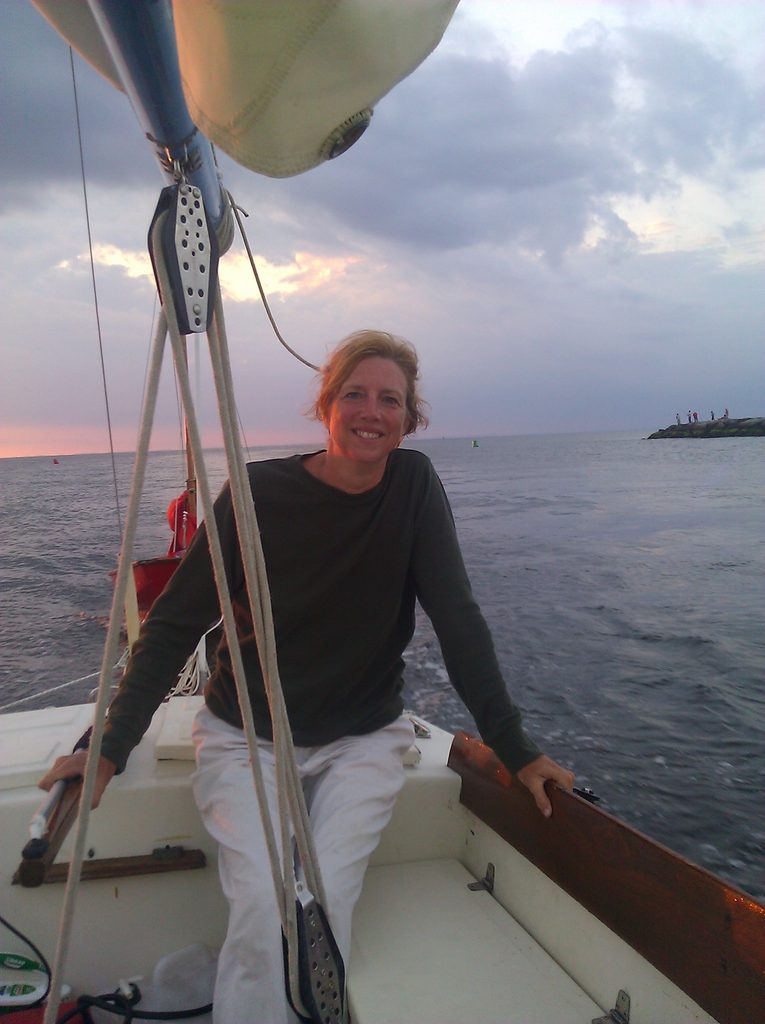
I met Jennifer in the summer of 2005. Sophia’s was in full swing, which meant occasionally it would make money. The events get a little confusing. I remember the two times I went to New York. Something happened each time, and I came back early to a totaled van – each time. I hadn’t met Jennifer the first time, I don’t think. But I had met her the second time.
Could I stop deliveries for a few weeks? Perhaps I did. In any case, the second year was the time we went sailing that I’ve written about in a few different places. It was also the time we went to Amsterdam. I had a lot of women friends, several women, that I’ve been involved with who turned into friends. They all wanted to meet Jennifer and liked her quite a bit. Jennifer was somehow quite confused with all of this, and she wasn’t that fond of these women.
But, we did go sailing after the first year. The actual goings-on in my life are confusing, and I guess I will leave them out. The sailing was wonderful, and Jennifer trusted me and seemed to have no fear. I am probably wrong about that.
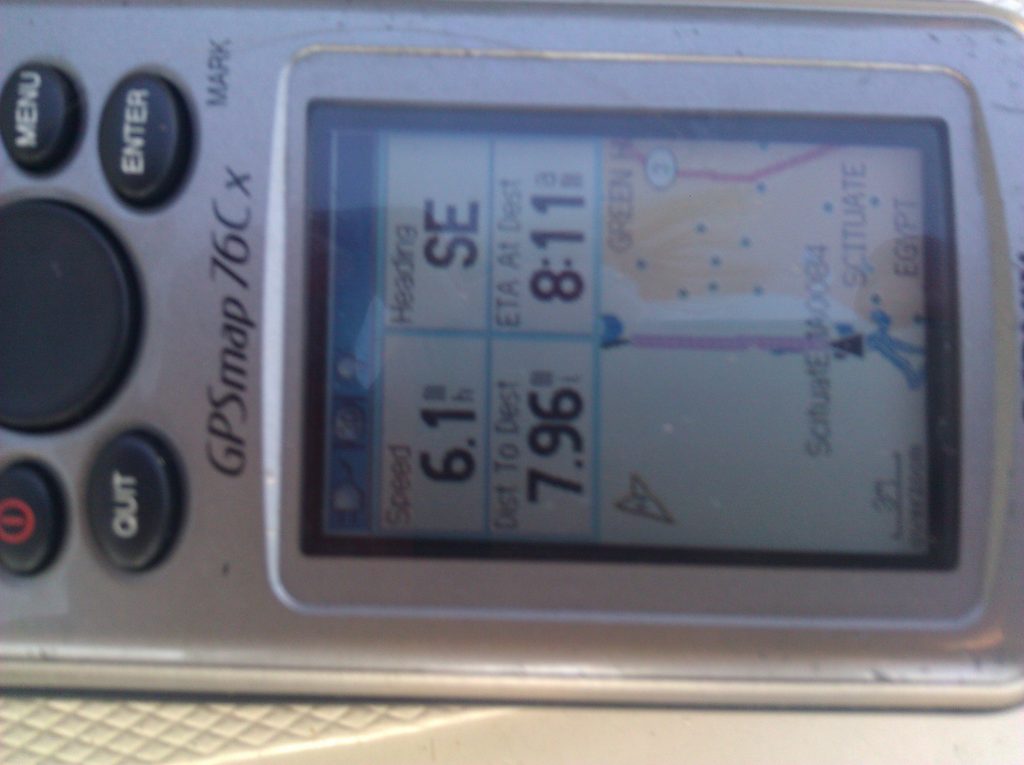
In those days, Jennifer and I used a handheld Garmin GPS device and paper charts that came in a book that had GPS coordinates. We’d decide where we wanted to go, put the coordinates into the handheld device, and sailed there. I had an auto tiller which I would connect to the tiller; it would steer for us. Also, when I turned it off, it would hold the tiller in whatever position I left it. We did this when we anchored so the tiller would stay straight.
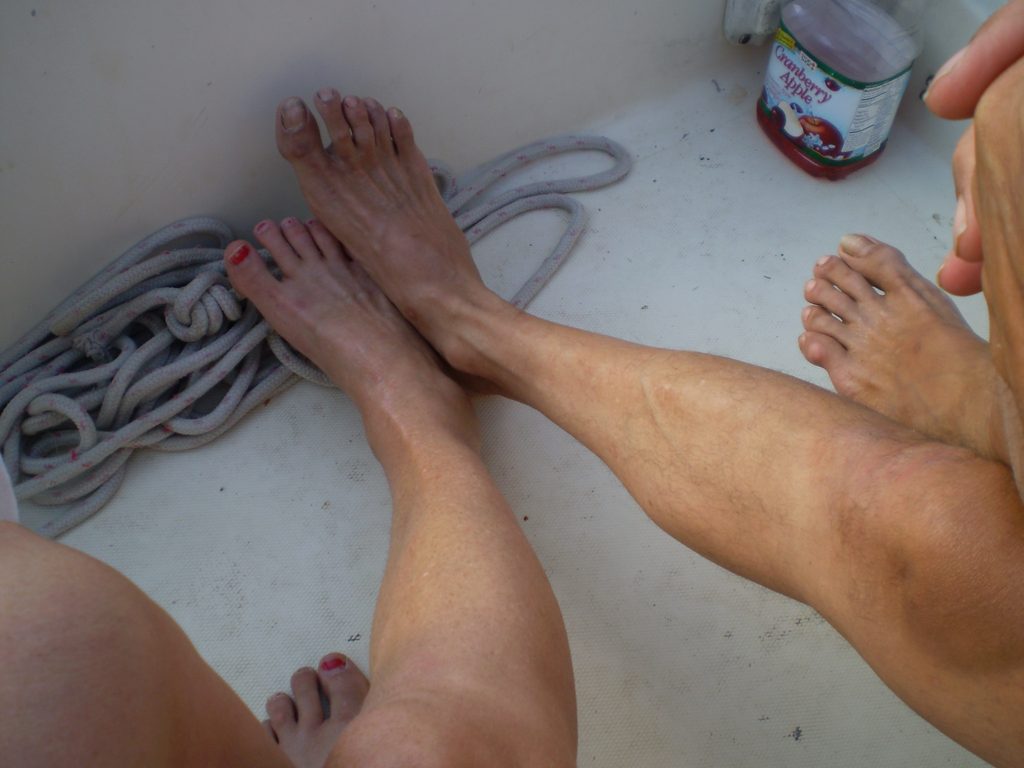
I always picture the sky as clear blue with light air. It often was with Jennifer, and we’d take off our clothes and lay in the sun as the boat ghosted along. I remember coming up behind another sailboat and talking to them as we passed (with clothing on). One of the men on board turned to his friend and asked how come we were moving through the air and they were not. Probably a combination of me spending my life in light airs on my light-air boats, and their not paying attention to the wind, if they could feel it. Of course the Thunderbird, like the Star was designed for light air. I haven’t sailed next to a T-Bird with the Maxi in a very long time. That would be interesting.
The only time we did was when we were sailing to Port Townsend from Lake Union for the boat show. It was a group of sailboats, and they all tried to put up spinnakers for the light air. There wasn’t enough light air to keep the spinnakers inflated. The correct sail was a big 170 which we had on the Maxi; no one else had a staysail that large. So we just sailed away from them. But, the T-Bird sailor coming out of the locks wasn’t a racer. I wonder what would’ve happened if he was.
Getting the Maxi, which is not designed as a racing boat, also changed things. It is the first time I didn’t worry about the rig coming down because it was fragile.
On Long Island Sound, crystal-blue skies with light winds were the majority. The wind would pick up in the afternoon as it does on the West Coast, but not as often and not as hard. I remember sailing in those days in probably 8- to 12-knot winds when it blew. And then just ghosting along when it didn’t. I wouldn’t use the engine until we realized we wouldn’t make it any other way. The engine would move us at 6 kn so I would calculate when we needed to be there and how far we could be to make it at 6 kn. When we hit that point, I’d fire up the engine and off we’d go.
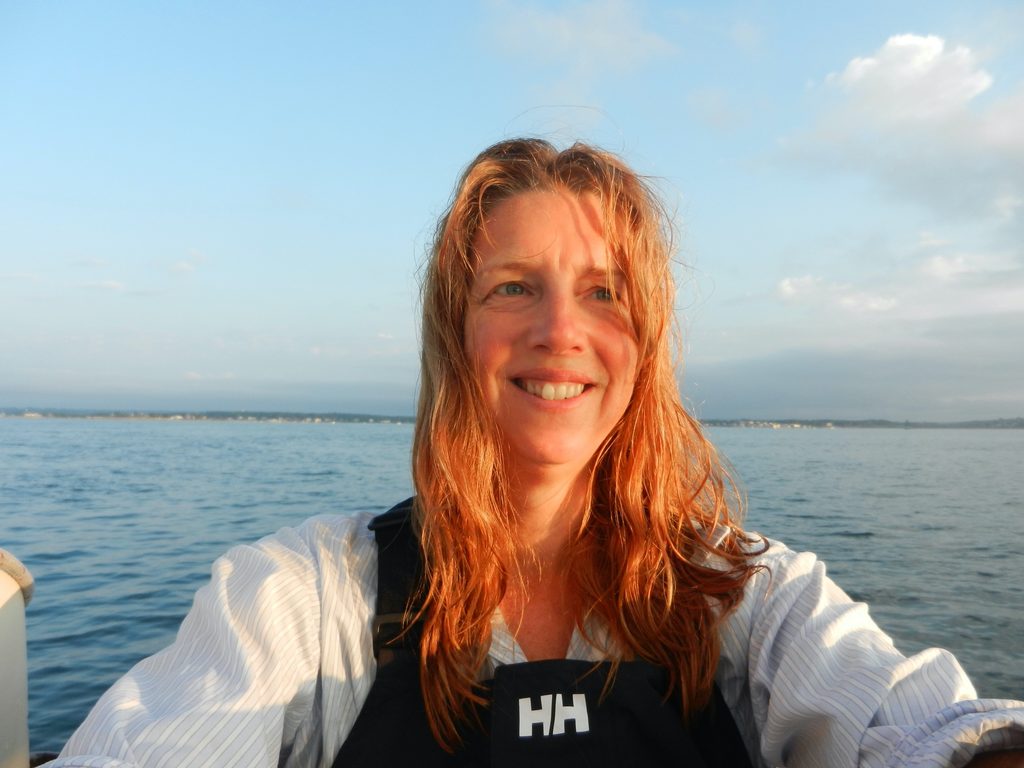
During the week, the sound was, and perhaps it still is, a very empty place. It is in the center of one of the most populated places in North America, but on any morning you can see five or 6 miles in any direction and not see another human being. It was quite magical.
Other days it would be overcast and cold, and perhaps it would rain. Some days we would just stay where we were and go ashore. Other days we would sail.
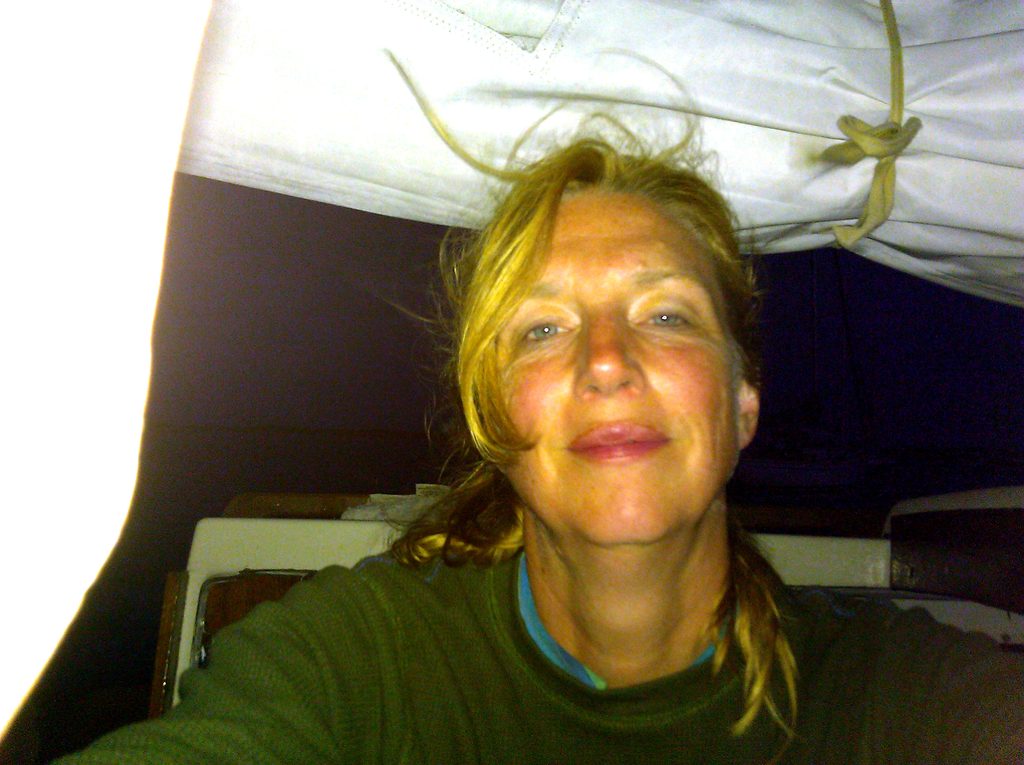
We were in a little Marina in some small city in Connecticut. It was quite windy and bumpy outside, and I figured we would sail towards the city a few towns. We got out into the Sound and it was quite bumpy. We could’ve done it, but it wouldn’t have been any fun. We turned around and went back to our slip; the Harbor Master gave us a ride to the railroad, which we took into the city. It is one of my favorite memories. Pat and Lorraine, two people I’m very fond of, lived in that town and took us to dinner on that trip. I had visited them before I met Jennifer when I anchored out on the outer edge of the mooring field and rowed to an easement that was part of the road that stopped at the Harbor. They came and got me, and we went to dinner then, too. Hopefully I paid that time because they paid this time.
It was about as far as we sailed that year. The next year we decided to sail to Massachusetts to a yacht club that had many T-Birds. Jennifer’s son would be there after spending a few weeks on a ship called the Corwith Cramer. We met his dad as well, when he came to pick up Owen after Owen had spent time with us. It was a fun summer.
In some of the harbors, we could anchor out. Sometimes in the mooring field where we could just anchor. Sometimes, a spot separate from the mooring field where we could just anchor. And others had a field of mooring buoys where they required us to anchor. They were all fun.
Being with Jennifer was the most fun. She was, and still is, beautiful, outgoing, and attracts people. She’s older and either is less brave or isn’t willing to go along with me despite being afraid. I don’t know if I’ll ever figure that out. I don’t know if she’ll ever tell me.
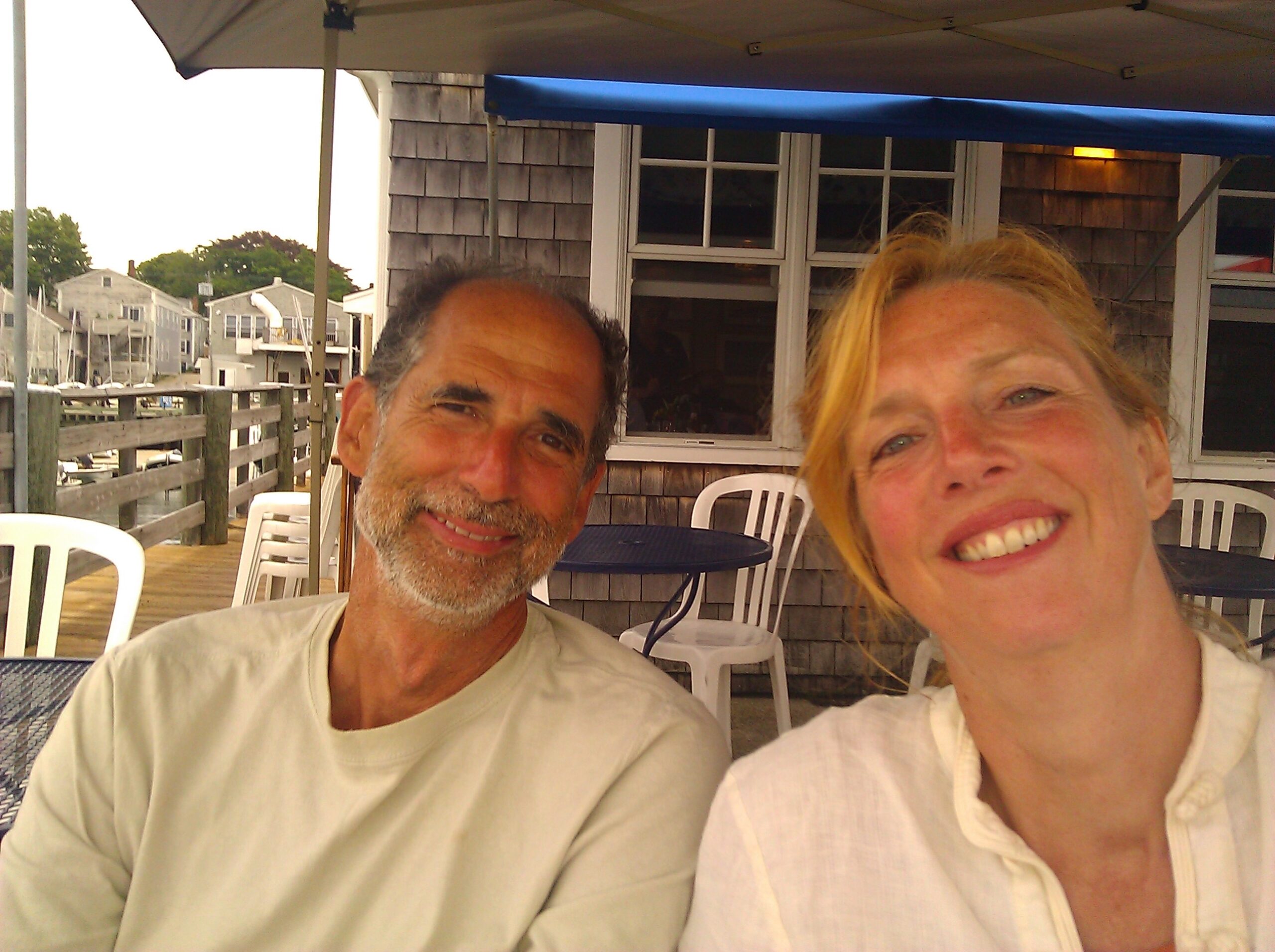
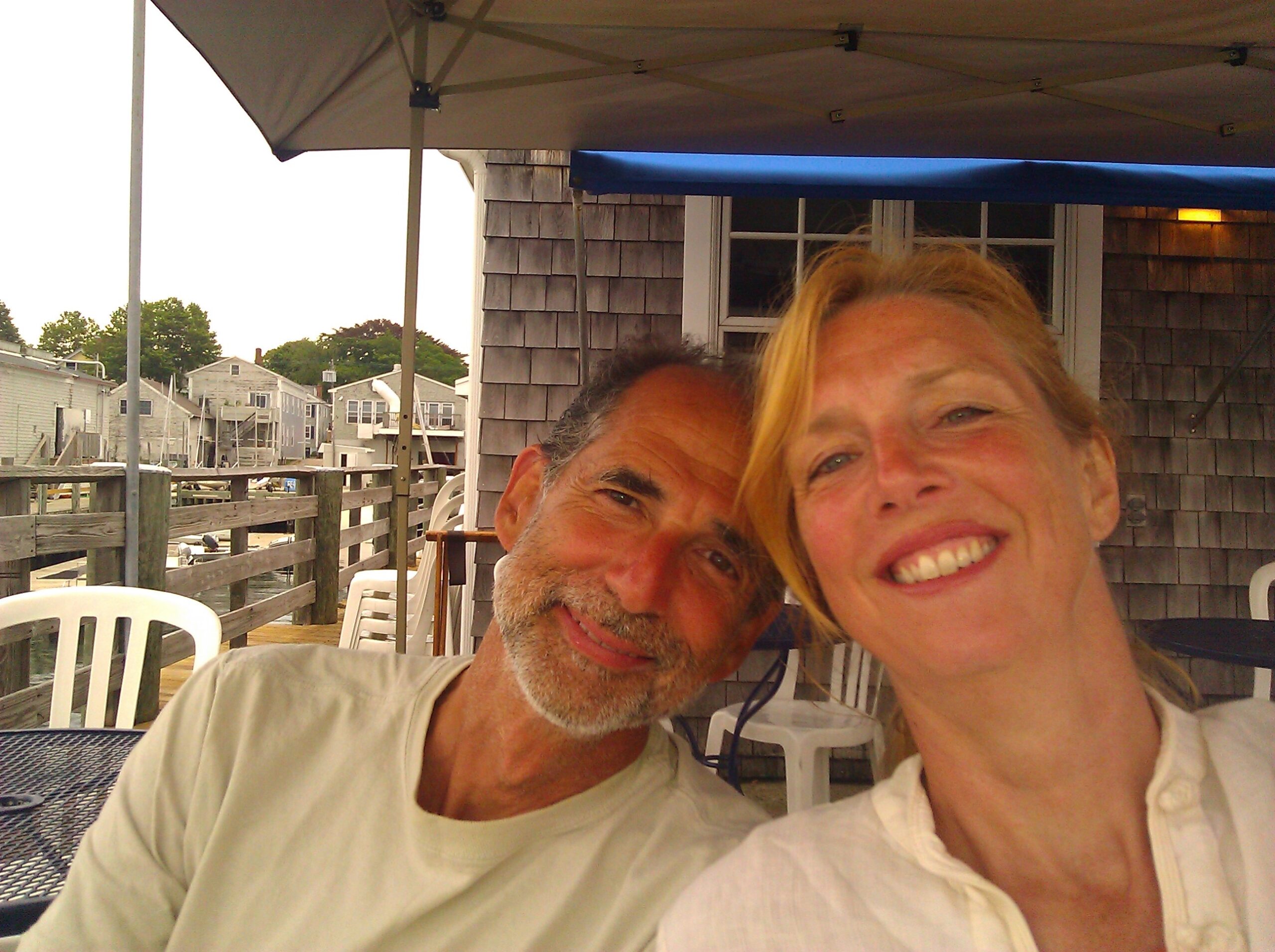
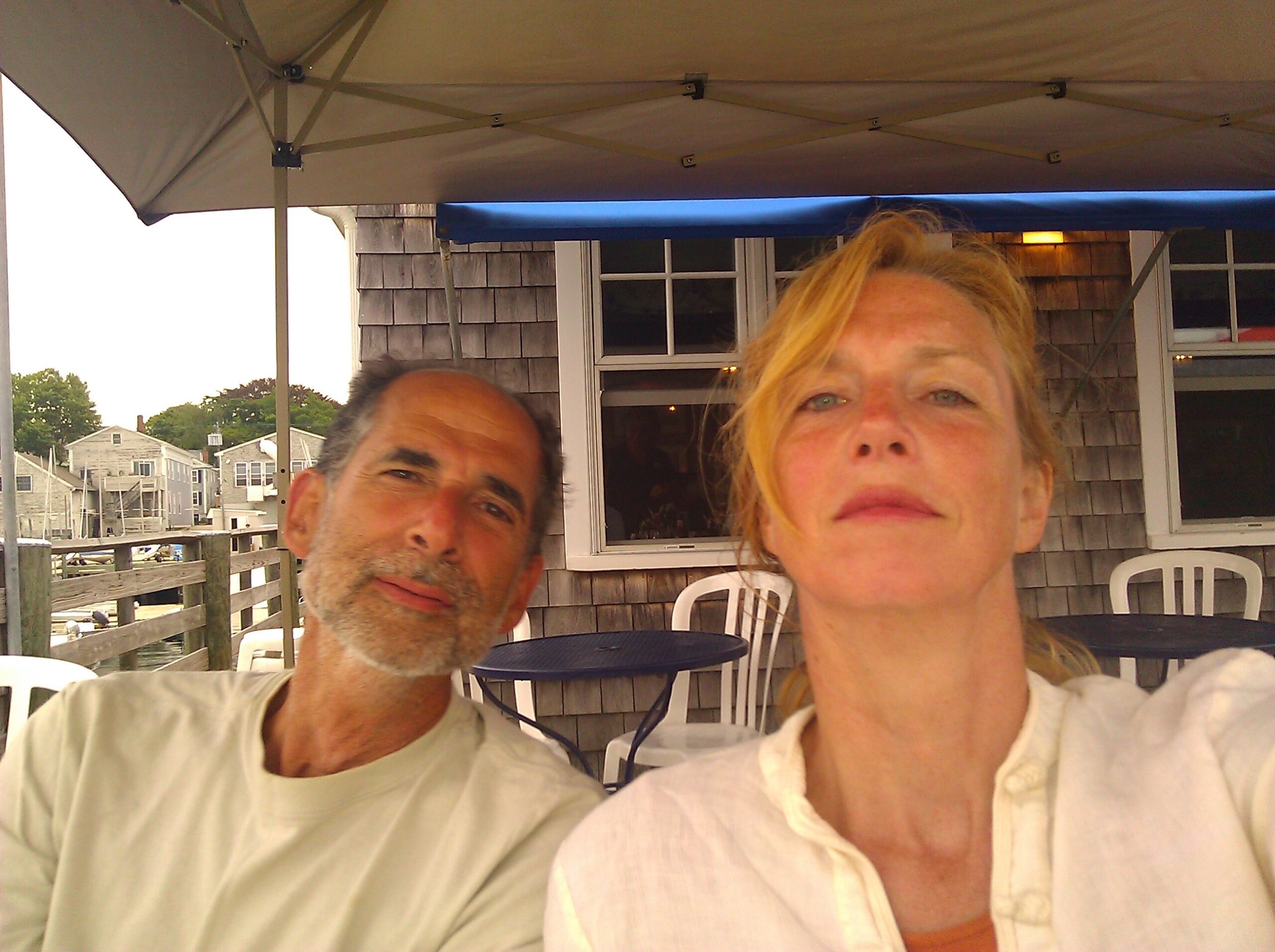
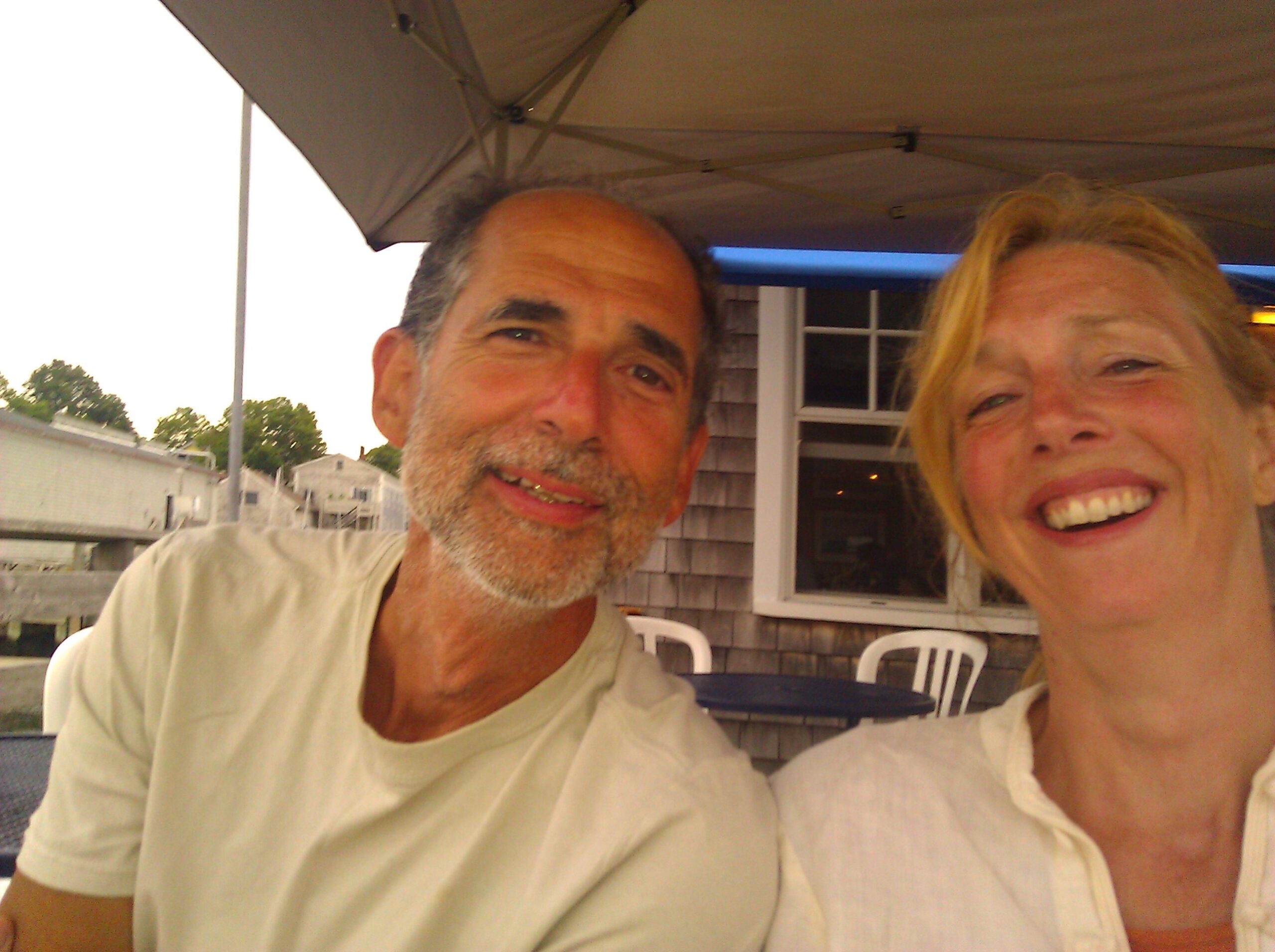
Jennifer would fly in and then take mass transit to meet me. Those days I always flew in a suit, and Jennifer dressed up similarly. We were treated better than when we dressed down. I was meeting a business colleague for lunch somewhere when the restaurant grew a little bit quieter as someone entered the restaurant. I looked up to see a very gorgeous, well-dressed woman walking in our general direction. My friend and I both sat silent for a moment while she walked to our table. It took a moment, and then I recognized Jennifer. She joined us for lunch. I think the man and I were both dressed in business attire, or were we?
About the time I got the T-Bird ready to go into the water in New York, my longest-term post-marriage relationship ended, as did the business, and I found myself with time to figure out what I would do next. Putting the boat into the water was exciting. Though I hadn’t realized quite how expensive because my dad was paying for it all. I have a picture of Taaris sitting next to a dock with no mast. That was so very exciting: it floated. They must’ve put up the mast without me. The next vision I have is her floating at her mooring.
I remember having Cathy and my nephew Vin with me on the boat when I couldn’t get the outboard to start. It was windy and I put a harness on to go out on the deck to take down the 135%. When we failed to get the engine to start, my Dad arranged for someone from the boat yard to catch us as we came in. He was there waiting; I dropped the main sail, and he just picked us up and took us to the mooring. This was the family who owned and worked at Ralph’s fishing station. They were actually his family. I got to know some of them, and they were very nice people. It was difficult for me to believe that his kids were actually my age, or better put that I am as old as they are.
I licked my wounds for a little bit on that one, but was back out soon afterwards with Cathy. That summer, my last sail, I went out single-handed. I took pictures. I was so proud, but I didn’t put up the jib. That would wait until the next summer.
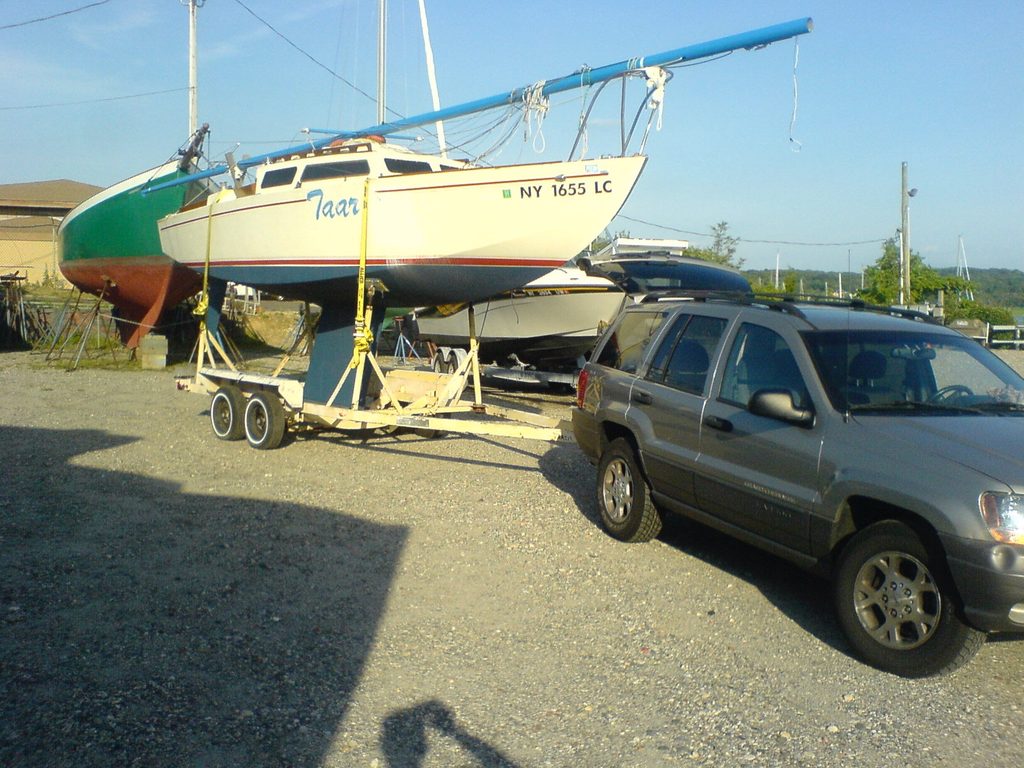
We took the boat out of the water and dragged it home, using a jeep that I borrowed from my brother Chris, Cathy’s husband. I repainted the bottom, which really wasn’t necessary, and fixed what I could. Taaris would get water down below; I never figured it out until the year we sold it. It was the rudder tube, which went from the hull up to the aft deck. It was cracked and would flex on one tack and not the other, and I never figured it out until that last year. I bought a replacement rudder tube after three false starts at McMaster-Carr.
I included the rudder tube with the boat when we sold it. By then I had bought Caro Babbo on the West Coast and had started sailing it.
The summers on Taaris were lovely. I would spend three months riding to the Port Jefferson library every morning five days a week and sailing two or three days of each of those weeks and, of course, across the weekend. I had negotiated six weeks vacation, but in the words of Michele Mottini, the CEO, I would never take them. He was right, of course.
The summers with Taaris crossed a lot of episodes of my life. It started with the end of a very rocky period, both financially and personally. Transitioned through a very happy period of my life where I traveled all over the world with Jennifer. And ended as I transitioned into working for the company that bought the first company, and finally retired two years later than I had planned. But by then Taaris had been gone for two years. My traveling had been greatly curtailed, and I wasn’t the least bit happy with the company that I had joined. It’s funny though: I have kept some very good friends from that company.
The first six weeks of every summer I would sail alone, anchoring in various places. Some of the places were spots I had been with Jennifer. Others were places that I would introduce her to.
Two that stick in my mind were the islands across the sound on the Connecticut side. On one trip, I couldn’t find a protected place and anchored by an island somewhere and rocked all night. It was near a replica Stonehenge that someone had built in his backyard and tour boats would come through the islands and visit that site. They would see me, and I would wave.
One evening while rocking at anchor, I read the book Fastnet, Force 10, which is about a race that went quite wrong in England. It didn’t really go quite wrong. A number of very small boat sailors panicked, which led to a few deaths. Smart sailors looked at the weather and decided they weren’t going. Other sailors decided they would, and when the storm came, some of those sailors decided to take to life rafts. Those that took to life rafts were the ones who died. It taught me, and I think many people who read the book, the adage that you step up into a life raft as your vessel is sinking. Never before. That was the end of the Midget Ocean Racing Class (MORC). Not because, looking backwards, they weren’t seaworthy, just because the sailors panicked. BTW, Ted Turner won the race. In early interviews, he said he didn’t know anything about the bad weather, which was probably true; his big boat was so far ahead of the small boats. Later he changed and said he knew about it but sailed better, and that was why he won. Our memories change as time passes, or perhaps Ted just liked the latter story, which fit with his self-image.
I wrote to Jennifer that night that reading this book was not a good idea when it was the least bit rocky.
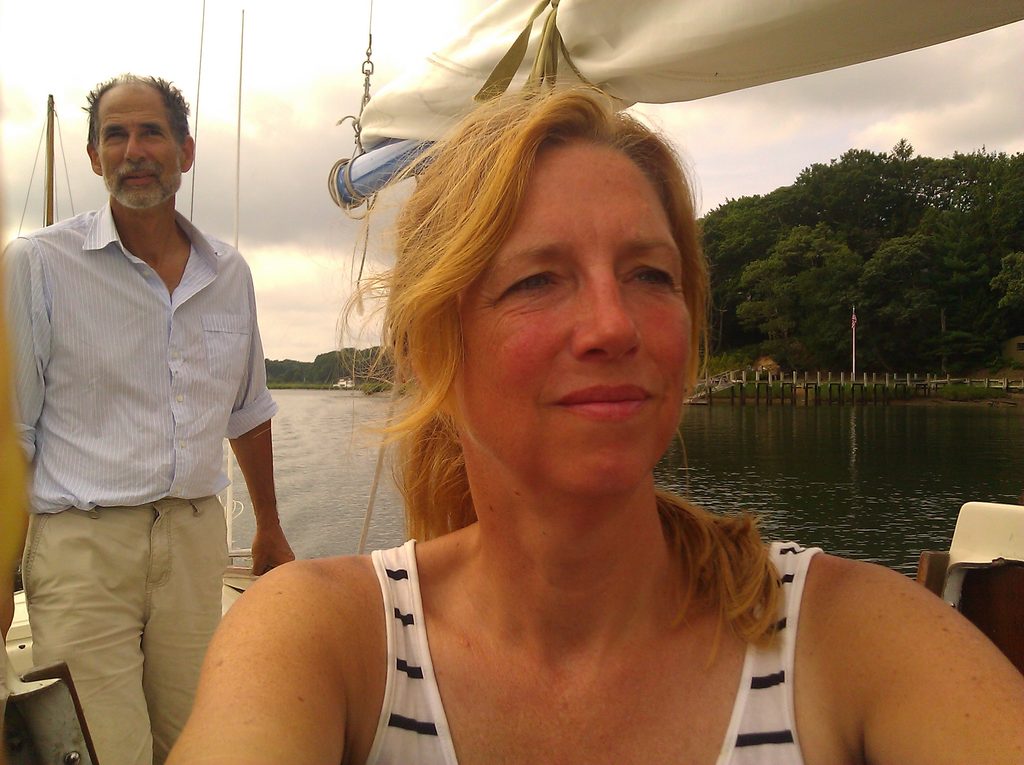
I also sailed into Five Mile River in Connecticut, where the boatyard allowed me to use their slip as long as I was out by 8 AM the next morning. I met Dan Boucher there, and we drank something and ate peanuts. Some yahoo who didn’t really sail, I guess, was trying to be friendly, but it wasn’t the time for me. He offered to race for registration papers as they used to do in Southern California with cars. I told him that if we were handicapped, I would do it and I would beat him, with the inference that he should just go away. It wasn’t a nice thing to do on my part. He was on a much larger boat, and I don’t know what he was thinking.
The next year I sailed across to meet Don Sullivan, and to go to lunch with him and Chris, whom I met in DC.
It was a wonderful lunch and a wonderful crossing. I kept both of those men as friends, and I feel quite close to each of them.
The years get confused. There were perhaps six of them.
I met Jennifer someplace in the Massachusetts area, and we sailed up to Marblehead. It was a nice town with a nice Harbor and very nice sailors. It was also where the 9.9 outboard I was using died. We were sailing solely under sail by that point. We anchored near some huge WWII minesweeper in the harbor. We were offered help with an outboard to move Taaris around, I think that we didn’t take it, but on the other hand, perhaps we did.
We took the outboard to someone who took a look at it and told us it was toast. Water rushed up through the exhaust port and destroyed the bearings. A two-cycle engine is very different than a four-cycle.
I bought a used one from someone we met for $300. We met someplace, I bought him a beer and we talked, but when it came time to pay him, he became very strange. It felt as if he didn’t trust me to pay him the money that I had in my pocket. In any case, I did pay him and then never saw him again, which was fine with me.
We also met a trimaran sailor who had been rescued by some large ship in the Atlantic on his way back from the Bahamas. He was somehow proud of that, though it gave me the creeps. He offered to have us come up to his house and take showers and things, something that we weren’t accustomed to because we had never done any long-distance sailing. Now it is something we offer routinely to long-distance sailors that we meet in Port Townsend.
Later that year on the way home, at the boat club with the T-Birds, someone there offered us his car, which, after being shy about it, we took and went shopping. We haven’t offered our car for people to use, but we do now offer to take them shopping, which we have occasionally done. No, I’m wrong; we have offered our car and have loaned it to people in Boat Haven, here in Port Townsend, for them to use for a few days.
In a diner in some town near there, we met a couple who commented, among other things, how tan I was. I hadn’t thought about it, but he was right. I was copper colored.
He asked where we were from, and it somehow came up that Jennifer lived in Seattle part time. He told us some relative (had once) owned a building, and would we send him a picture of it. I was all eager, but Jennifer didn’t see the point. When we were next in Seattle, I shot a picture of the building, but never sent it.
The couple sticks out in my mind because they were a rather new couple, and the woman was very pleased, tickled might be the proper word, because the man said she reminded him of his mother. Different strokes for different folks.
Do things always look better looking back, or were they? Jennifer and I were new to each other. Her children were young, and their adult problems were still on the horizon.
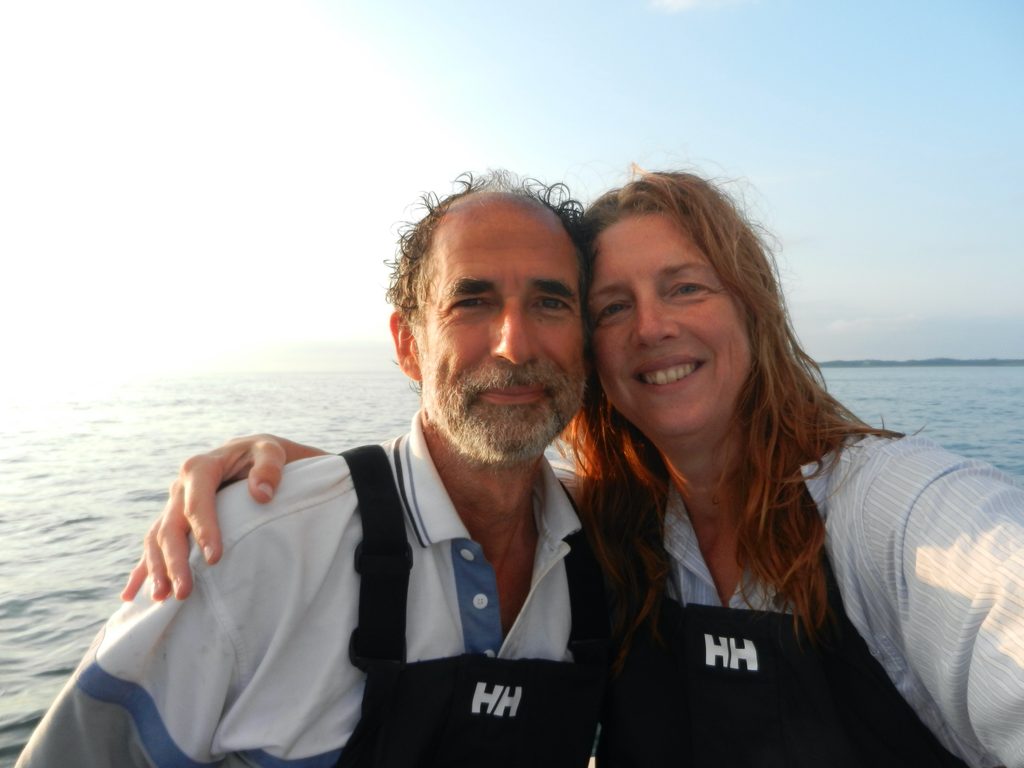
We’re always more attractive than we thought we were when we look back. I remember being very unhappy in the years before I met Jennifer and never since. So there is something to these happy memories; they really were happy times.
But then I don’t remember being seriously unhappy since I’ve met Jennifer. It does pose a cause-and-effect question, or perhaps were we both ready? We’d lived enough of our lives to know how to build a good one, and we just did.
This was the training for the long-distance sailing group that we eventually became part of. We never met anyone who sailed any long distance, except for the trimaran sailors and a couple that I met in Newport Harbor.
The Newport Harbor people were a couple I met while anchored in Newport Harbor. I was sitting in my cockpit when the man rowed by and spoke to me. He had just sailed up from the Bahamas; I was captivated by it. We talked about boats and sailing. He was a pretty new sailor.
I had already eaten, but when he came by to invite me to dinner, I said yes. I brought a few beers with me… I don’t think anything else. They had sailed up, motoring a part of the way: they needed to run the engine two hours each day to charge the batteries for the fridge. The boat was a traditional boat, probably a Westsail or something similar. Its name enchanted me at the time: Compass Rose. Now it seems kitschy. His spouse was a very lovely woman. The man could talk, and he did. When I went to the Newport boat works, I met with the manager; one of us mentioned this man. The deciding factor as to whether it was the same man was when the manager said how much the man talked. I remember the boat owner fondly.
The New York Yacht Club has an outstation there that teaches little kids to sail Optis just like every yacht club in the world. It was such fun to watch these kids sail these boats. Within a short while, they don’t think about what they are doing, they just know.
I was there again with Jennifer, but I don’t remember if it was the same year or the next. We had dropped anchor and watched a boat start to drag. We spoke to the crew, who denied that they were dragging, but in the middle of our conversation the big blow that comes every day around 4:30 blew through and our anchor let loose. Jennifer, who used to have me start the outboard, ran to the back, started it in a single pull, and started moving us forward while I pulled up the anchor. It was beautifully done. She had come a long way since we started.
We learned about being a good citizen when we watched a man replace the faulty hose on the water dock with one of his own. We learned about finding a place to put the dinghy while we were ashore. We learned about how expensive eating ashore could be and how nice people are no matter how much or little money we all have.
Perhaps this is the beginning of my cruising book. I don’t have any new or exciting things to write about, but I have the old exciting things to write about. You’ve all come this far, so maybe taking a look back isn’t a bad thing.
There is plenty to do on Caro Babbo, so I’ll continue to write about those, and I’ll write about the past, how I got here as it pertains to sailing. I’ve never been a racer… competing never really did it for me. I’ve just sailed as I like it, influenced by friends and Jennifer.